Why do some people habituate and others struggle?
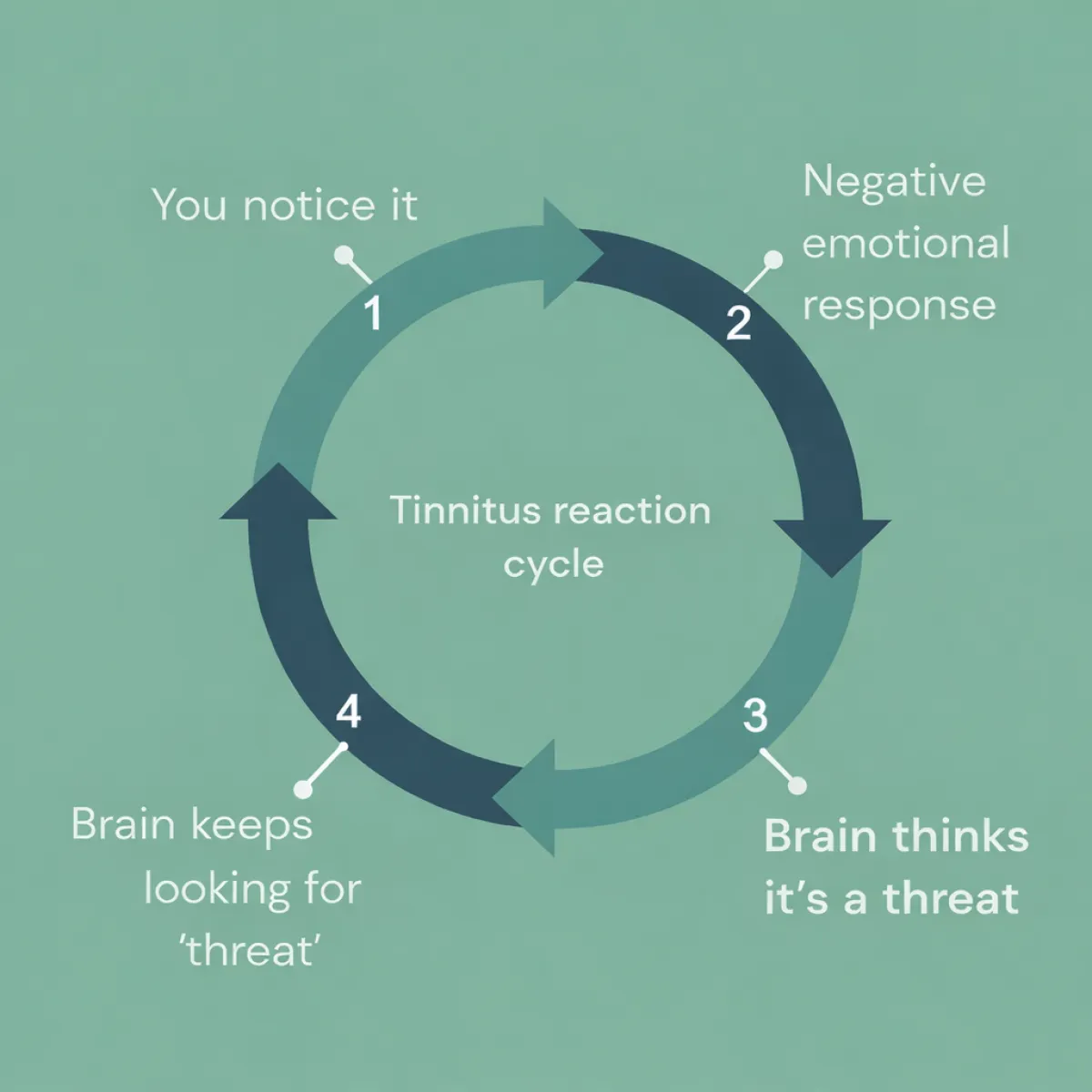
Habituation is the process where your brain learns that tinnitus is not a threat and stops giving it so much attention. Many people do habituate over time, but the speed and ease of that process varies a lot from person to person. That difference is usually less about the sound itself and more about how the brain and body respond to it.
Common reasons some people habituate faster
-
Lower threat response. If your nervous system does not label the sound as dangerous, it is easier for your brain to file it as unimportant background information.
-
Less monitoring and checking. The more often you scan for tinnitus, compare it, or test it in silence, the more you train your attention to keep finding it.
-
Better sleep and recovery. Poor sleep increases stress sensitivity and makes tinnitus harder to ignore during the day.
-
Fewer stressors at the same time. Big life stress, burnout, grief, or ongoing uncertainty can keep the alarm system turned up.
-
Supportive beliefs and expectations. If you believe habituation is possible and you interpret spikes as temporary, you are less likely to spiral into fear.
-
Hearing support when needed. Untreated hearing loss can make the brain work harder to listen, which can increase sound awareness and fatigue.
Common reasons some people struggle longer
-
Anxiety, panic, or health worry. These can amplify vigilance and keep tinnitus tied to a threat signal.
-
Sound sensitivity. Hyperacusis or strong discomfort around everyday noise can make sound feel unsafe, which blocks habituation.
-
A stressful start. If tinnitus began during a frightening event or a period of high stress, the brain may have learned a stronger association between tinnitus and danger.
-
Rumination and problem solving loops. Trying to force an immediate solution can backfire if it keeps your attention locked on the sound.
-
Avoidance patterns. Avoiding normal sound environments or activities can shrink life and make tinnitus feel more central, even if avoidance feels protective in the short term.
-
Low capacity. If you are depleted, unwell, or juggling too much, you may have less mental bandwidth to build new coping habits.
What helps move things toward habituation
-
Reduce the threat story. The goal is not to love tinnitus, but to teach your brain it is safe to stop treating it as an emergency.
-
Practice attention flexibility. Gently returning attention to what you are doing, again and again, is training. It is not a test you pass once.
-
Use sound wisely. Some people do better with soft background sound, especially in quiet rooms or at bedtime, so tinnitus is not the only thing the brain can lock onto.
-
Protect sleep. Consistent wake times, a wind down routine, and fewer late night checks of tinnitus often make a noticeable difference.
-
Address stress and mood directly. Relaxation training, talking therapies, and practical stress management can lower the baseline arousal that keeps tinnitus loud in your attention.
-
Expect ups and downs. Spikes often happen. Progress usually looks like fewer bad days, shorter bad patches, and faster recovery.
When it is worth getting extra support
If tinnitus is causing significant distress, sleep loss, panic, or low mood, it can help to speak with a qualified healthcare professional. Also seek medical assessment promptly if tinnitus is new, sudden, one-sided, pulsatile, or comes with other concerning symptoms.
The key point is that struggling does not mean you are broken or that habituation is impossible. It usually means your nervous system has learned to treat tinnitus as important. With the right supports and repeated practice, that learning can change.
Don't forget: the solution to your tinnitus could be the Tinnihush therapy programme.